A suit makes a claim. It always has. The garment is neutral, but the body inside and the surrounding space are not. When the wrong body enters the wrong space wearing the right clothes, the suit turns from fabric into a statement of resistance. What it says depends on who is wearing it, where, and what they refuse to accept about being there… when half measures will not do.
Black Ivy
In the 1950s and 1960s, Black men across America — musicians, writers, philosophers, activists — adopted the Ivy League wardrobe and gave it meaning it had never had before. This movement is documented by Jason Jules and Graham Marsh in Black Ivy: A Revolt in Style (Reel Art Press, 2021).


Malcolm X. Martin Luther King Jr. James Baldwin. Miles Davis. John Coltrane. Sidney Poitier. Amiri Baraka. They wore Oxford cloth button-downs, three-button jackets, repp ties, and hand-stitched loafers. These were the garments of a privileged elite — the Ivy League, the country club, the boardroom that did not want them. They took those clothes and wore them into rooms where their presence was contested, into marches where their bodies were at risk, into recording studios, lecture halls, and courtrooms where their ideas were on trial.
This was not assimilation. Jules is clear: Black Ivy was never about dressing white. Its origins run in the opposite direction. The classic Ivy wardrobe was raided, remixed, and re-envisioned, pulled from elitist origins into something coded and intentional. The suit became armor. The tie became a dare.
Jason Jules calls it a sartorial power grab.
And there is a deeper stain in the cloth. Brooks Brothers, the firm most associated with the Ivy League uniform, supplied clothing to enslavers in the antebellum South. Historian Jonathan Michael Square has documented surviving Brooks Brothers livery coats worn by enslaved domestics — garments cut to display the wealth of the men who owned them. The same clothier that outfitted the American establishment also dressed the people that the establishment held in bondage.
When Black men wore those clothes into the March on Washington, they were not borrowing a costume. They were reclaiming the terms.
The Zoot Suit
Before Black Ivy, there was the zoot suit. It emerged from Harlem in the late 1930s. The zoot was the first major American garment to move from the margins to the mainstream. It went from Black neighborhoods in New York, Chicago, and Detroit out into Chicano, Filipino, and Italian American communities across the country.
The zoot suit was excess during scarcity: high-waisted, wide-legged trousers; knee-length jackets with padded shoulders; long watch chains; fedoras with feathers. During wartime rationing, wearing one defied conservation orders. Ralph Ellison wrote that the zoot suit held profound political meaning. For people denied other capital, fashion insisted on visibility.
The response was violence. In Los Angeles in June 1943, white servicemen attacked Mexican American and Black youth in the streets. They stripped zoot suits off their bodies. The Los Angeles City Council briefly considered making the garment itself illegal. The Zoot Suit Riots were not about fabric. They were about who gets to be seen, and on whose terms.
The zoot suit established the principle that would echo through every suited rebellion that followed: when the wrong people dress too well, power treats the clothes as a threat.
The Teddy Boys
The concept crossed the Atlantic. In early 1950s London, working-class teenagers began wearing long drape jackets with velvet collars, drainpipe trousers, and crepe-soled shoes. This was a style adapted from Edwardian-era tailoring. Savile Row had recently tried to revive it for wealthy clients. The target market wasn’t interested. The suits went unsold. The shops across London marked them down. Young men from South London council estates bought them instead.
The press called them Teddy Boys—Ted short for Edward—and quickly cast them as folk devils. They were blamed for youth violence and national decline. When on the right bodies, the style was celebrated. Once working-class youth adopted it, the same clothes became a uniform of delinquency.
The Teddy Boys were Britain’s first recognizable youth subculture. Every movement that followed — the mods, the rockers, the punks, the goths — descends from them. Their foundational act was the same as the one the zoot suiters performed a decade earlier: taking clothes designed for people above their station and wearing them as an identity that could not be ignored.
The Teddy Boy wardrobe drew directly from the zoot suit silhouette, particularly the broad-shouldered drape jacket. The connection is not incidental. The zoot suit had already passed through British black markets during the war via spivs — petty criminals who sold contraband goods. They dressed in long American-style jackets. The Teds inherited a garment that had already been through several cycles of appropriation, rebellion, and moral panic.
Jinx
In the late 1990s and early 2000s, a small group of urban explorers in New York City called Jinx took suits underground. Founded by L.B. Deyo and David “Lefty” Leibowitz, Jinx explored the tunnels, ruins, rooftops, and forbidden infrastructure of the city while dressed in black suits, silk shirts, narrow ties, and sunglasses. Their uniform, as they described it, was sacrosanct — permitted no modification, whether at cocktails or in storm drains.
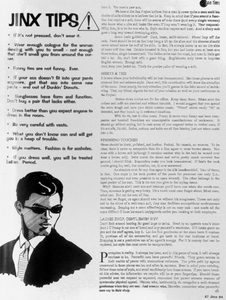
Jinx published a zine, ran an athenaeum society, and wrote Invisible Frontier: Exploring the Tunnels, Ruins, and Rooftops of Hidden New York (Crown, 2003). They crawled through aqueducts in tailored jackets and climbed the Brooklyn Bridge in dress shoes. Absurdity was the point — but so was the signal. Someone in a suit caught in a restricted area seems eccentric or lost; in dark clothes with a flashlight, a criminal.
Jinx was fundamentally a white endeavor. Their agents moved through spaces where their skin was already a pass, and the suit amplified that pass to near invulnerability. The suit was operational technology. It managed the perceptions of anyone who might intervene.
The Third Argument
At times, the Autumn Society wears suits into ruins. We document disrecognized spaces—abandoned institutions and erased histories—in garments once used to deny Black people access to recognized space: hospitals, universities, courthouses, archives.
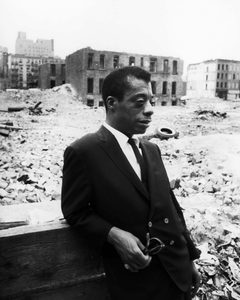
When a Black explorer in a tailored suit stands in the ruin of a state hospital and writes in a field notebook, three histories are present in the room at once: the history of the institution, the history of the garment, and the history of the body wearing it. None of them is neutral. The suit makes that convergence visible.
Sources
Jules, Jason, and Graham Marsh. Black Ivy: A Revolt in Style. Reel Art Press, 2021. https://www.reelartpress.com/catalog/edition/220/black-ivy-a-revolt-in-style The definitive visual and textual history of Black men’s adoption and transformation of the Ivy League wardrobe during the mid-twentieth century. Essential for understanding that Black Ivy was appropriation as a political act, not imitation.
Jules, Jason. “Jason Jules Tells the Story Behind Four of the Iconic Photos in His Groundbreaking Menswear Book ‘Black Ivy.'” As told to the editors. InsideHook, February 16, 2022. https://www.insidehook.com/style/jason-jules-explains-photos-black-ivy Jules in his own voice on four key images from the book, with emphasis on intentionality — that Black men wearing Ivy was a conscious, deliberate choice, not accident or assimilation. His reading of the Sonny Rollins photograph is particularly sharp: these were night people who showed up dressed for the camera, knowing they were being documented.
Deyo, L.B. and David Leibowitz. Invisible Frontier: Exploring the Tunnels, Ruins, and Rooftops of Hidden New York. Crown, 2003. The Jinx book. Documents the suited exploration of New York’s infrastructure with literary ambition and operational detail. Establishes the suit as a tool in urban exploration practice.
Deyo, L.B. “Jinx Tips.” Jinx: The Magazine of Global Urban Adventure, vol. 1, no. 4, p. 47. The Jinx suit guide, written as operational doctrine. Establishes the suit as perception management tool and covers specific guidelines for agents: dark, loose, solid-colored suits; black leather shoes only; custom shirts; silk ties; sunglasses for surreptitious environment canvassing. Primary source document for Jinx’s understanding of the suit as technology rather than costume.
Square, Jonathan Michael. “A Stain on an All-American Brand: How Brooks Brothers Once Clothed Enslaved People.” https://www.bgc.bard.edu/research/articles/616/a-stain-on-an-all Lecture series presented at Stanford Humanities Center, Bard Graduate Center, Museum of Fine Arts Houston, and Maryland Center for History and Culture, 2020–2023. Related project: Fashioning the Self in Slavery and Freedom (digital humanities).
Square’s research documents surviving Brooks Brothers livery coats worn by enslaved domestics, establishing the Ivy clothier’s direct entanglement with slavery.
Décharné, Max. “Before the Punk Rockers, There Were the Working-Class Teds.” Interview by Meagan Day. Jacobin, March 21, 2026. https://jacobin.com/2026/03/teddy-boys-fashion-rock-postwar-britain Interview drawn from Décharné’s Teddy Boys: Post-War Britain and the First Youth Revolution (Profile Books, 2025) — the first full-length treatment of the Teds. Key contribution: Décharné frames the Teddy Boys as a class provocation rather than a criminal menace, arguing that their real offense was breaking a centuries-old British dress code that reserved self-expression for elites. Also establishes the direct link between growing up on bomb sites and the refusal to be invisible.
Peiss, Kathy. Zoot Suit: The Enigmatic Career of an Extreme Style. University of Pennsylvania Press, 2011. https://www.jstor.org/stable/j.ctt3fhn0m An academic history tracing the zoot suit from Harlem origins through the 1943 riots. The book establishes the garment as a site of racial politics, wartime anxiety, and contested visibility.
Codex / Protocol